
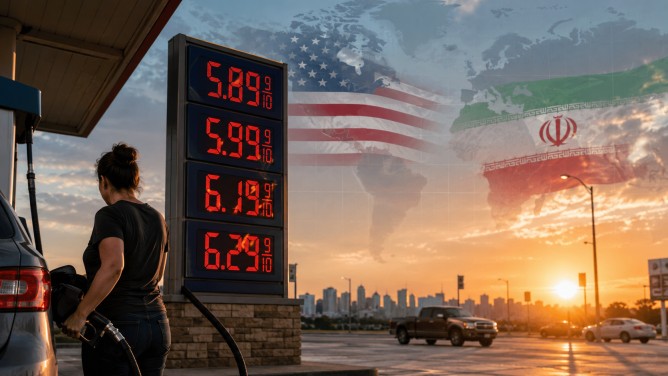
Gasoline prices in the United States have surged to unprecedented levels for the month of August, driven by escalating tensions between the U.S. and Iran and ongoing security concerns in the Strait of Hormuz, a crucial channel for global oil exports. The national average for gasoline now stands at $4.06 per gallon, marking an increase of about 5 cents from the previous week and roughly $1 more than the same time last year. The impact is even more pronounced in states like California and Hawaii, where the average price has soared to approximately $5.50 per gallon.
The price surge is part of a broader trend of elevated oil prices that began with the onset of the US-Israel conflict with Iran. The situation was exacerbated by disruptions in the Strait of Hormuz, a pivotal passageway for the world’s oil supply. At one point, Brent crude oil prices climbed to $112 per barrel, and although they have since decreased, they remain considerably higher than their levels from a year ago. Despite a temporary easing of tensions that briefly brought gasoline prices down following interim agreements between the U.S. and Iran, stalled negotiations have reignited concerns about a prolonged stand-off, causing prices to rise once more.
The recent uptick in prices follows a breakdown in talks over Iran’s nuclear program after the two countries failed to reach a consensus within a specified 60-day diplomatic period. Compounding the situation, President Trump has issued new threats against Oman, further stoking fears of escalating regional conflict. These developments have placed additional strain on American consumers, who are already grappling with high living costs. Over the past six months, the increased fuel prices have forced Americans to spend tens of billions of dollars more than they would have prior to the conflict.
Persistently high fuel costs could introduce renewed inflationary pressures if energy prices remain elevated for an extended period, thereby affecting the broader economy. As American households continue to feel the pinch, the ongoing situation underscores the potential for further financial strain if diplomatic solutions are not reached soon. The energy market remains on edge as stakeholders closely monitor geopolitical developments in the Middle East, particularly around the strategic Strait of Hormuz.