
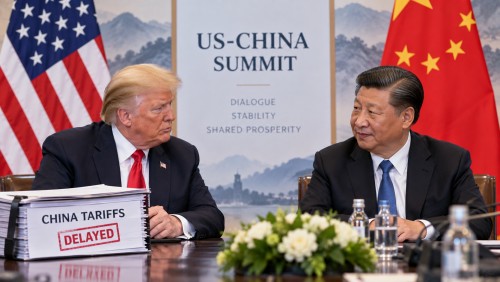
Amid ongoing trade tensions, the United States is holding back on announcing new tariffs against China and other major trading partners. This decision comes as U.S. President Donald Trump is set to meet Chinese President Xi Jinping, signaling a potential shift in the negotiation dynamic between the two economic giants.
The proposed tariffs, which could include a 7.5% duty on Chinese goods, are part of a broader strategy by the Trump administration to leverage trade talks. Such measures aim to address concerns over China’s excess industrial capacity. Should these tariffs be implemented, they would elevate the overall U.S. tariff rate on Chinese imports to approximately 20%, a level that Beijing has suggested aligns with the existing trade truce.
In preparation for the leaders’ summit, trade negotiators from both countries are expected to engage in discussions aimed at reaching possible agreements. President Xi’s visit marks his first trip to the United States since 2023, emphasizing the significance of these talks.
This delay in tariff announcement follows the Trump administration’s investigations, initiated in March under Section 301 of the Trade Act of 1974. These investigations target more than a dozen trading partners, focusing on the issue of excess production capacity. Any tariffs arising from these probes could exacerbate trade pressures on both China and other nations.
China has maintained a firm stance, warning that any increase in U.S. tariffs beyond the existing levels could prompt a response. Chinese officials argue that using concerns over excess capacity as a justification for protectionist measures is unwarranted, further complicating the negotiation landscape.
As the Trump-Xi summit looms, both nations are keen to solidify trade commitments, with tariffs remaining a central issue in their economic relations. The outcome of these negotiations could have lasting implications on the global trade environment.