
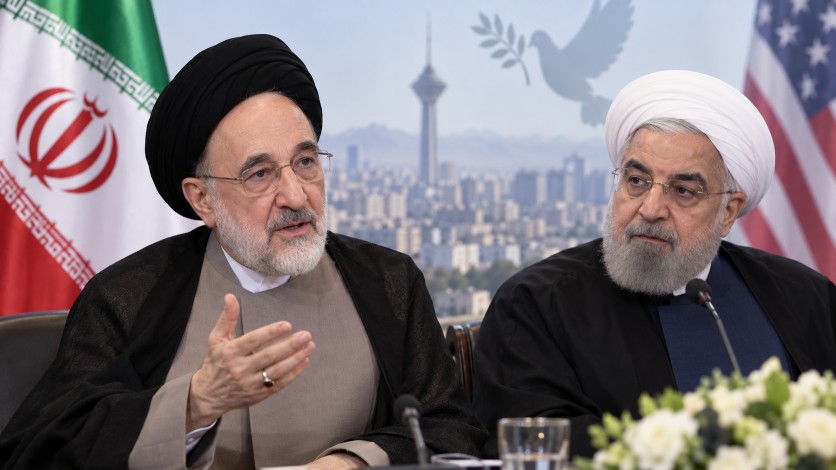
In a significant departure from Iran’s prevailing hardline stance, former presidents Mohammad Khatami and Hassan Rouhani have advocated for resolving the ongoing tensions with the United States through what they term a “dignified” peace. This call for a shift in policy challenges the nation’s entrenched wartime rhetoric. Rouhani has gone a step further, suggesting that the Iranian populace should be involved in deciding whether to persist in the conflict. At a recent gathering with ex-officials, he questioned the merit of continuous confrontation with major powers if it lacks public support.
Simultaneously, Khatami has cautioned against the perils of governing under the influence of protracted wartime sentiments. He champions diplomacy and negotiations, emphasizing that Iran’s long-term national interests should outweigh any calls for persistent confrontation. These statements have sparked strong reactions from Iranian hardliners, who have accused the former presidents of advocating for surrender. In response, conservative media platforms have criticized their stance, and loyalist rallies have echoed sentiments opposing compromise. Additionally, the editor of the hardline publication Kayhan has called for investigations into the actions of these former leaders.
This internal debate in Iran emerges at a time when the nation is grappling with mounting economic challenges. Increasing fuel prices and dwindling oil revenues are compounding the economic strain, while the strategic concerns surrounding the Strait of Hormuz continue to impact global energy markets. Despite these pressures, Iranian officials maintain a defiant public front, asserting that Tehran might adopt a more aggressive military stance if diplomatic efforts with Washington falter. This raises concerns that economic pressures could lead to an escalation in tensions rather than prompt immediate concessions.
Amidst these tensions, regional diplomatic efforts continue to unfold. Notably, Saudi Arabia and Iran have sustained dialogues over regional issues, with high-level discussions focused on preventing further escalations and promoting stability. These contrasting approaches underscore a widening rift between advocates for diplomacy and proponents of continued resistance. While former Iranian leaders push for negotiation and increased public engagement, the current regime remains steadfast in its warnings of military escalation should its demands remain unmet.